
Inclination sensors
Inclination sensors are suitable for the precise measurement of inclination angles and for determining the orientation of objects relative to the horizontal. They detect changes in the position of machines, plant or moving components and provide reliable measurements for the monitoring and control of technical processes. Thanks to their versatility, inclination sensors are used in a wide range of sectors, such as mobile hydraulics, mechanical engineering and industrial automation.

Inclination sensor NGK
| Measurement range | up to 360° |
|---|---|
| Axis | 1 or 2 |
| Linearity | ±0.1° |
| Output | 0.5...4.5 V / 0.1...4.9 V / 0...5 V / 0...10 V / 4...20 mA |
| Protection class | IP68/IP69K |
| Temperature range | -40...+85 °C |
| Downloads | Data sheet NGK | Installation guide NGK | Flowchart NGK |
Inclination sensors - Applications
Leveling of Aerial Work Platforms
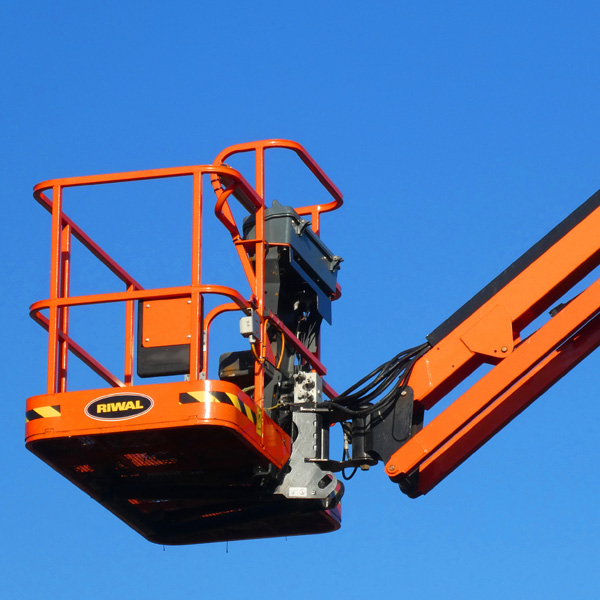
Aerial work platforms are frequently used on uneven ground, such as on construction sites or during building maintenance work. To ensure the work platform can be operated safely, the undercarriage must be aligned as horizontally as possible. At the same time, the work basket should maintain its horizontal position even when the telescopic arm is extended.
Tilt sensors continuously measure the degree of inclination of the ground support and the work platform. The measured values are transmitted to the machine control system and can be used for automatic leveling as well as for monitoring permissible angles of inclination. This allows the alignment of the aerial work platform to be reliably monitored and adjusted to changing operating conditions.
Inclination control on construction machinery

In construction machinery such as excavators, wheel loaders, and mobile cranes, the accurate measurement of angular positions plays a crucial role. Especially when working on uneven terrain, both the inclination of the vehicle’s subframe and the position of moving components must be taken into account. Precise angle measurement supports the monitoring and control of the machine’s various movements.
Tilt sensors, for example, measure the angular position of booms, buckets, and other moving machine parts. If multiple sensors are installed at different positions, the measured values can be cross-referenced to determine the spatial position of the working components. The data obtained is used, among other things, for work area monitoring, positioning, and to support automated machine functions.
Alignment and Tracking of Photovoltaic Plants
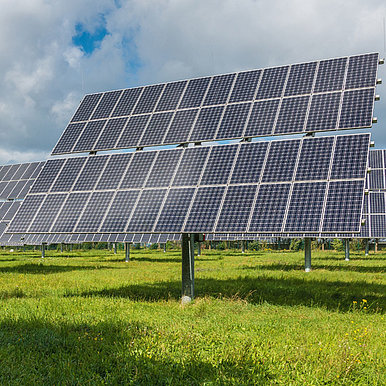
Modern solar power plants often use movable mounting systems to adjust their orientation throughout the day based on the sun’s position. In so-called solar trackers, the solar modules are moved along one or more axes to position them as optimally as possible for sunlight. A prerequisite for precise tracking is the reliable detection of the modules’ current angular position.
Tilt sensors measure the orientation of the solar modules and transmit the corresponding angle values to the higher-level control system. This allows the actual position to be compared with the desired orientation, and the tracking to be adjusted accordingly. Precise angle measurement thus supports the efficient operation of tracked photovoltaic systems and solar thermal systems.
Inclination measurement on telescopic handlers
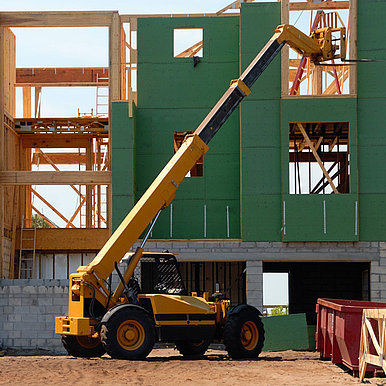
Telescopic handlers are used in agriculture, construction, and industrial logistics. They enable the lifting and transport of heavy loads even at greater heights and on uneven ground. To ensure that pallets, goods, or other loads can be picked up and transported as horizontally as possible, the angle of the fork or attachment must be precisely controlled.
Tilt sensors detect the current inclination of the lifting fork or boom and transmit the measured values to the machine’s control system. Based on this information, the fork position can be corrected and adjusted to the vehicle’s current position. This makes it easier for the operator to precisely pick up, lift, and set down loads and ensures controlled material transport even under varying terrain conditions.
Stabilization of Automated Guided Vehicles (AGVs)
Automated Guided Vehicles (AGVs) are used in industrial logistics to automatically transport goods, pallets, and heavy loads between various production and warehouse areas. In doing so, they often have to navigate varying floor conditions and minor unevenness. It is particularly important to monitor the tilt of the vehicle and its load when transporting heavy or delicate goods.
Tilt sensors mounted at appropriate locations on the vehicle measure the current tilt and detect changes in the vehicle’s orientation. The measured values can be transmitted to the transport system’s control unit to enable, for example, active leveling via hydraulic or electric actuators. In this way, the vehicle can be aligned in a controlled manner even with uneven loading or changing ground conditions, thereby supporting the transport of sensitive loads.


